Quick answer:
Choose 70cl / 700ml when your main spirits market is the UK, EU, or another Europe-oriented market.
Choose 750ml when your main market is the United States or a market where buyers expect the U.S. standard full-size spirits bottle.
If you plan to sell in both markets, check the bottle design before choosing. One visual bottle family may need two adjusted versions.
The difference is only 50ml, but for a spirits brand it can affect market fit, bottle proportions, label space, and sourcing decisions.
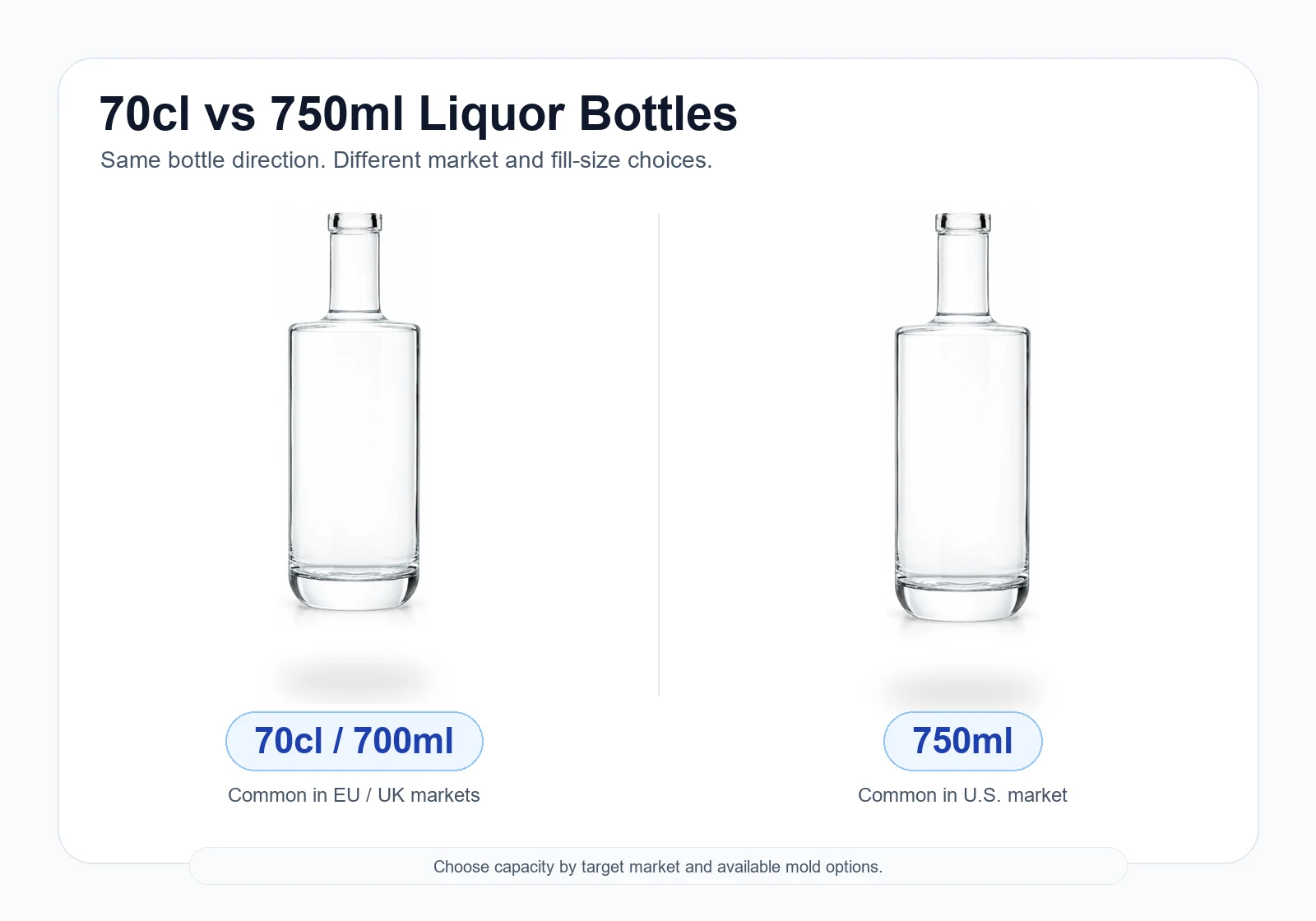
A 70cl bottle and a 750ml bottle look close in size. The difference is only 50ml. But for a spirits brand, that small difference can change how the product fits the market, how buyers read the value, and whether the bottle design can be sourced smoothly.
Use this guide when you are choosing bottle sizes for a spirits launch, quote request, or supplier discussion.
If you only need a basic definition, read our simpler comparison article: 70cl vs 750ml Liquor Bottles.
If you need a full size chart, read: Liquor Bottle Sizes Guide.
70cl vs 750ml: What Is the Difference?
The basic difference is simple:
| Bottle size | Milliliters | Approx. U.S. fluid ounces | Common market fit |
| 70cl | 700ml | about 23.7 fl oz | UK, EU, and Europe-oriented spirits markets |
| 750ml | 750ml | about 25.4 fl oz | United States and U.S.-oriented spirits markets |
A 750ml bottle holds about 7% more liquid than a 70cl bottle.
For consumers, that may look like a small serving difference. For brands, it can affect pricing, label layout, bottle proportions, shelf comparison, and how the product is explained by distributors.
The better question is not “which one is bigger?” The better question is: which size fits your first market and bottle strategy?
Why Bottle Size Is a Market Decision
Liquor bottle size is not only a packaging detail. It is also a market signal.
In many European markets, 70cl feels normal for spirits. In the United States, 750ml is more familiar as the standard full-size bottle. If a bottle size feels unfamiliar in the target market, the brand may need extra explanation, even when the size is allowed.
For a new spirits product, bottle capacity should be confirmed before the bottle body, label, and decoration plan are finalized. Otherwise, a design that looks good in one capacity may need changes when the final market size is selected.
A good bottle decision usually connects four questions:
| Question | Why it matters |
| Where will the product launch first? | Market habit is often different between Europe and the U.S. |
| Is the bottle standard or custom? | Standard molds and custom designs follow different sourcing paths. |
| Will one bottle family serve multiple markets? | The brand may need both 70cl and 750ml versions. |
| Will the label and decoration still work? | Capacity can affect the shoulder, fill height, label panel, and visual proportion. |
This is the main point where this article goes further than a basic 70cl vs 750ml explanation: it treats bottle size as a sourcing and market-fit decision, not just a volume conversion.
When 70cl Makes Sense
A 70cl bottle equals 700ml. It is a common spirits size in the UK, EU, and many Europe-oriented markets.
Choose 70cl when:
- your first sales market is Europe;
- your distributor expects a 700ml spirits bottle;
- you are building a bottle family for European retail;
- your brand positioning fits a European or export-style presentation;
- you want the product to feel natural on shelves where 70cl is already common.
For whisky, gin, vodka, rum, and other spirits sold in Europe, 70cl is often a safer starting point. It helps the product match local retail habits.
That does not mean every 70cl bottle automatically looks premium. Shape, glass weight, base design, closure, decoration, and label area still matter. Capacity is only one part of the packaging decision.
When 750ml Makes Sense
A 750ml bottle is the familiar standard-size liquor bottle in the United States.
Choose 750ml when:
- your first sales market is the U.S.;
- your retail or distributor channel expects 750ml;
- your product line needs to sit beside other U.S. standard spirits bottles;
- your buyer wants a familiar full-size bottle;
- your bottle family already uses 750ml as the core SKU.
For tequila, vodka, whiskey, gin, rum, and other spirits aimed at the U.S. market, 750ml is usually the easier commercial choice.
This is partly about regulation, but also about habit. U.S. buyers and consumers are used to seeing 750ml as a standard bottle size. If a brand uses 700ml in a market where 750ml is expected, the value story needs to be clear.
70cl or 750ml by Spirit Type
The target market is still the first decision. But different spirits categories often have different packaging habits.
| Spirit type | Common size direction | What to check before ordering |
| Whisky / Whiskey | 70cl is common in the UK and EU; 750ml is common in the U.S. | Market first, then bottle family. A premium whisky bottle also needs the right base weight, shoulder shape, and label panel. |
| Vodka | 750ml works well for North America; 70cl is safer for Europe-oriented retail. | If the brand sells globally, check whether one clear bottle direction can support both sizes. |
| Gin | 70cl is common in the UK and many European gin markets. | Gin bottles often rely on label design and bottle proportion, so confirm label space before final artwork. |
| Tequila | 750ml is usually the stronger starting point for U.S.-focused tequila brands. | Check shelf presence, closure direction, and whether the bottle shape fits the brand's price point. |
| Rum / Liqueur | Depends on first market and channel. | Confirm whether the bottle needs a standard mold for faster launch or a more ownable custom direction. |
This section is not a fixed rule for every brand. It is a practical starting point for supplier discussions. A gin brand selling mainly in the U.S. may still choose 750ml. A whisky brand built for Europe may start with 70cl. The bottle size should follow the market, channel, and product story.
Can the Same Bottle Mold Support 70cl and 750ml?
Sometimes one bottle family can cover both sizes. But buyers should not assume that one mold automatically works for both 70cl and 750ml.
The supplier needs to check:
- internal capacity and fill level;
- bottle height and body diameter;
- shoulder position and label panel;
- base thickness and glass weight;
- neck finish and closure direction;
- decoration area and label artwork.
Some standard bottle families may already have both 70cl and 750ml versions. In other cases, minor internal volume adjustments, such as around 10-30ml, may be possible only after checking the bottle's internal geometry. A 50ml change should not be treated as a verbal promise; it usually needs a revised geometry check. For a custom bottle, capacity should be confirmed before mold design, label artwork, and sample approval.
If the brand wants one visual identity for Europe and the U.S., ask the supplier a direct question:
Can this bottle family support both 70cl and 750ml, or do we need two adjusted versions?
That question is more useful than asking only whether 70cl or 750ml is "better."
Standard Mold vs Custom Bottle
Not every project needs a custom mold.
A standard mold may be better when:
- you are launching a new product;
- you need a faster sourcing path;
- the order quantity is still developing;
- you want to test the market before investing in custom tooling;
- the bottle shape does not need to be unique.
A custom bottle may be better when:
- the bottle shape is part of the brand identity;
- you need a special shoulder, heavy base, embossing, or unique silhouette;
- the product is positioned as premium or giftable;
- the bottle needs to stand out on shelf;
- you plan a long-term product line and repeat orders.
The right choice is not “standard is cheap” or “custom is better.” The right choice depends on your market, order plan, brand positioning, and how much the bottle shape matters to the product story.
If you are planning a non-standard bottle silhouette, read our Custom Bottle Service page before finalizing the size and label direction.
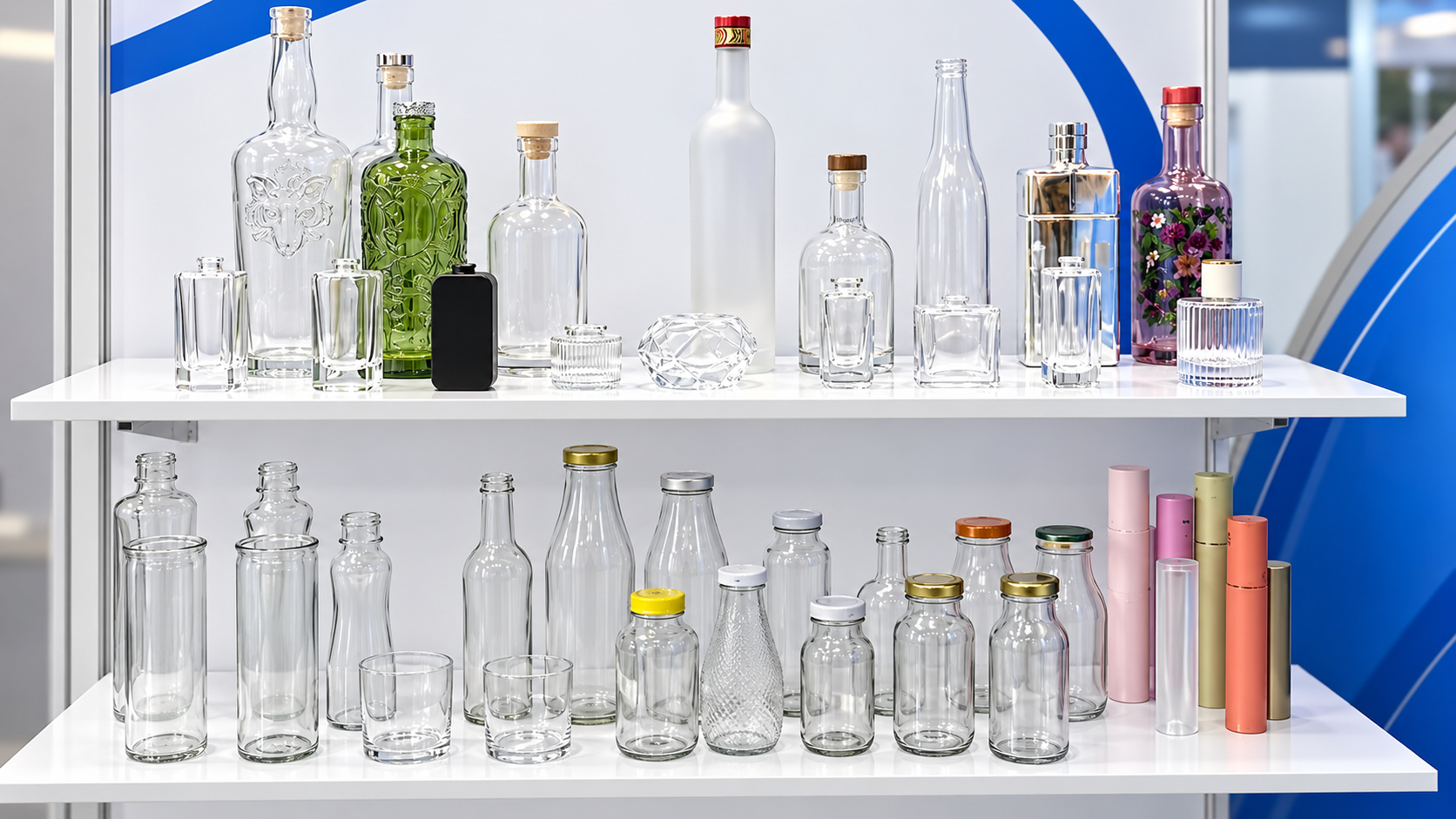
Does 70cl Look Smaller Than 750ml to Consumers?
The physical difference is small, but market habit changes how buyers read it.
In Europe, 70cl usually does not feel small for spirits. It is a familiar full-size format, so consumers and distributors are already used to seeing it on whisky, gin, vodka, and other spirits shelves.
In the U.S., 750ml is more familiar as the standard full-size bottle. If a brand uses 700ml in the U.S., the label, pricing, and shelf presentation need to make sense. Otherwise, the buyer may wonder why the bottle contains less than the format they expected.
This is also where shrinkflation concerns can appear. If the shelf price stays close to a 750ml competitor but the bottle contains 700ml, the packaging needs to make the value feel clear through the bottle shape, closure, decoration, and brand story.
For example, The Macallan's official Fine & Rare 1962 page lists availability in both 750ml and 700ml, which shows why premium whisky brands and collectors may need bottle-size variants without changing the overall brand presentation.
For premium spirits, capacity is only one part of the value signal. Bottle shape, glass weight, base thickness, closure, decoration, handfeel, and label design often influence perceived value more than the 50ml difference. But the capacity still needs to match the market story.
That is why 70cl vs 750ml should be decided together with bottle style, not after the design is finished.
How to Choose: A Simple B2B Framework
Use this table before ordering bottles:
| If your situation is… | Start with… | Then check… |
| Launching mainly in Europe or the UK | 70cl / 700ml | Available bottle style, label area, closure direction |
| Launching mainly in the U.S. | 750ml | Distributor expectations and product positioning |
| Selling in both Europe and the U.S. | Both 70cl and 750ml options | Whether one bottle family can support two versions |
| Testing a new spirits product | Standard mold options | Whether the look is strong enough for your price point |
| Building a premium or ownable bottle | Custom bottle direction | Capacity, profile, decoration area, and tooling feasibility |
If the project is still early, start with the market. Then choose the bottle style.
If the project already has a bottle design, check whether that design can support the required capacity before finalizing samples or labels.
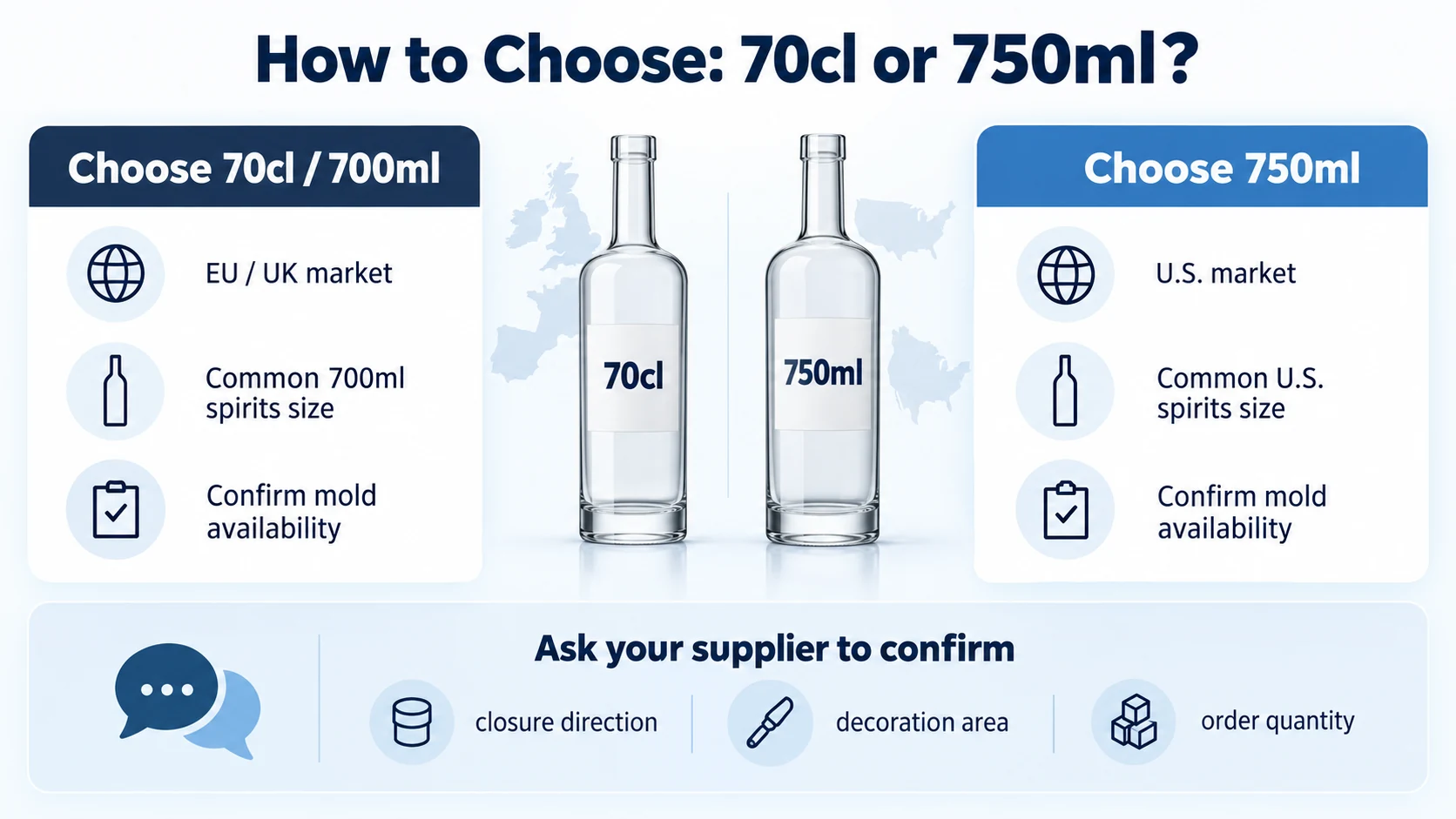
Cost, Carton Packing and Shipping: What Really Changes
The 50ml capacity difference alone rarely decides the final bottle cost.
As a rough market reference, plain standard glass liquor bottles in large-volume orders may sometimes be discussed in broad ranges such as US$0.18-US$0.40 per unit, while heavier-base, colored, decorated, or custom-mold bottles can be much higher. This should not be treated as a fixed quotation. For real sourcing, the final price depends on bottle weight, mold type, decoration, packing method, order quantity, and shipping requirements.
For B2B buyers, the bigger cost questions are usually:
| Cost factor | Why it matters |
| Glass weight | A heavy-base premium bottle can cost much more than a lightweight standard bottle. |
| Mold type | Standard molds are usually faster and lower-risk than new custom molds. |
| Decoration | Screen printing, frosting, coating, embossing, and metallic effects can change the unit cost. |
| Carton packing | Bottle height and diameter can affect carton size and bottles per case. |
| Pallet efficiency | A small change in case size can affect pallet loading and ocean freight efficiency. |
| Order quantity | Larger orders usually make tooling, decoration setup, and unit cost easier to manage. |
This is why a 70cl bottle is not automatically cheaper than a 750ml bottle. A simple 750ml standard bottle may be cheaper than a complex 70cl custom bottle. A heavy-base 700ml bottle may cost more than a lightweight 750ml bottle.
Before comparing quotes, ask whether the supplier is quoting the same glass weight, decoration, carton packing, and order quantity. Otherwise, the comparison is not meaningful.
Common Mistakes When Choosing 70cl or 750ml Bottles
Many bottle-size problems happen before the first sample is made.
| Mistake | Why it causes problems |
| Choosing only by volume | The target market, channel, and consumer expectation matter more than 50ml. |
| Designing the label before confirming the bottle | Capacity can change shoulder position, fill height, and label panel size. |
| Assuming one mold can cover both sizes | Some bottle families can support both; others need adjusted versions. |
| Comparing only unit price | Glass weight, decoration, packing, pallet loading, and repeat orders can matter more. |
| Using 700ml in the U.S. without a value story | Buyers may compare it with familiar 750ml bottles and question the value. |
| Treating standard and custom bottles the same | Standard molds and custom molds follow different timelines, MOQs, and risks. |
The safest path is simple: choose the first market, confirm the capacity, check available molds, then finalize the bottle design and label.
If you already have a bottle silhouette, MISA can help review whether it is better kept as one bottle family or developed as separate 70cl and 750ml versions.
70cl vs 750ml: Quick Sourcing Notes
For a real sourcing project, ask your bottle supplier these questions:
- Do you have standard 70cl and 750ml liquor bottle options in similar styles?
- Can one design direction support both capacities?
- Will the label area change between 700ml and 750ml?
- Does the bottle need a new mold, or can an existing mold work?
- What closure direction fits the bottle neck and product style?
- If decoration is needed, where is the safe decoration area?
You do not need to solve every detail before contacting a supplier. But you should know your target market and preferred capacity direction.
That makes the first discussion much more useful.
FAQ: 70cl vs 750ml Liquor Bottles
Is 70cl the same as 700ml?
Yes. 70cl equals 700ml.
Is 70cl smaller than 750ml?
Yes. 70cl is 50ml smaller than 750ml.
Is 750ml the same as a fifth?
In the U.S., 750ml is often called a fifth because it replaced the older one-fifth gallon bottle format.
Can 700ml liquor bottles be used in the U.S.?
U.S. distilled spirits standards of fill include both 700ml and 750ml. Market habit still matters, so brands should check with their importer, distributor, or compliance partner before choosing 700ml for a U.S. launch.
Can one mold make both 70cl and 750ml bottles?
Not always. It depends on the bottle design, internal capacity, fill height, and mold structure. Some standard designs may have both versions. Custom bottles need a specific design review.
Does 70cl cost less than 750ml?
Not necessarily. Final bottle cost depends on glass weight, mold type, decoration, order quantity, packaging, and production requirements. The 50ml capacity difference alone does not decide the cost.
Which size is better for a new spirits brand?
If Europe is your first market, start by checking 70cl options. If the U.S. is your first market, start with 750ml. If you plan to sell in both markets, compare whether one bottle family can support both sizes.
Do different spirits prefer 70cl or 750ml bottles?
Yes, but the preference usually follows the target market. Whisky, gin, and vodka sold in Europe often use 70cl. Tequila and many U.S.-focused spirits commonly use 750ml. The spirit type helps guide the decision, but the first sales market is still the main factor.
Does 70cl look smaller than 750ml?
The size difference is only 50ml, so the visual difference can be small. In Europe, 70cl normally feels like a standard spirits bottle. In the U.S., buyers are more used to 750ml, so a 700ml bottle may need clearer value positioning.
Can 70cl and 750ml use the same label design?
Sometimes, but it should be checked before final artwork. Bottle height, shoulder position, label panel, and fill height can change between two capacities, even when the bottle family looks similar.
Will 70cl or 750ml affect carton packing and shipping cost?
It can. If the bottle height, diameter, or weight changes, the outer carton, bottles per case, pallet loading, and ocean freight efficiency may also change. This matters more for large-volume export orders.
Should bottle size be decided before branding and labeling?
Yes. Capacity should be confirmed before label dimensions, decoration area, carton packing, and sample approval. Changing capacity late can cause redesign work.
Need Help Choosing 70cl or 750ml Bottles?
If you are choosing bottles for a real spirits product, send us your target market, preferred capacity, and bottle style direction.
MISA can help compare standard liquor bottle options and custom bottle directions for whiskey, vodka, gin, rum, tequila, and other spirits packaging projects.
Useful pages:
References
- European Union, Directive 2007/45/EC: spirit drinks include 700ml among listed nominal quantities.
- U.S. TTB, Distilled Spirits Labeling: Net Contents: authorized standards of fill include both 700ml and 750ml for distilled spirits.


